Structure: Information Architecture
Which pages exist, how they connect and in what order a visitor meets them. It comes before any visual design, and changing it later is expensive.
Websites that reflect your style, structured the right way for advertising with Google Ads Quality Score in mind.
We build on Next.js, and the SEO groundwork is in place on launch day. Ads and search run on solid ground from the start.

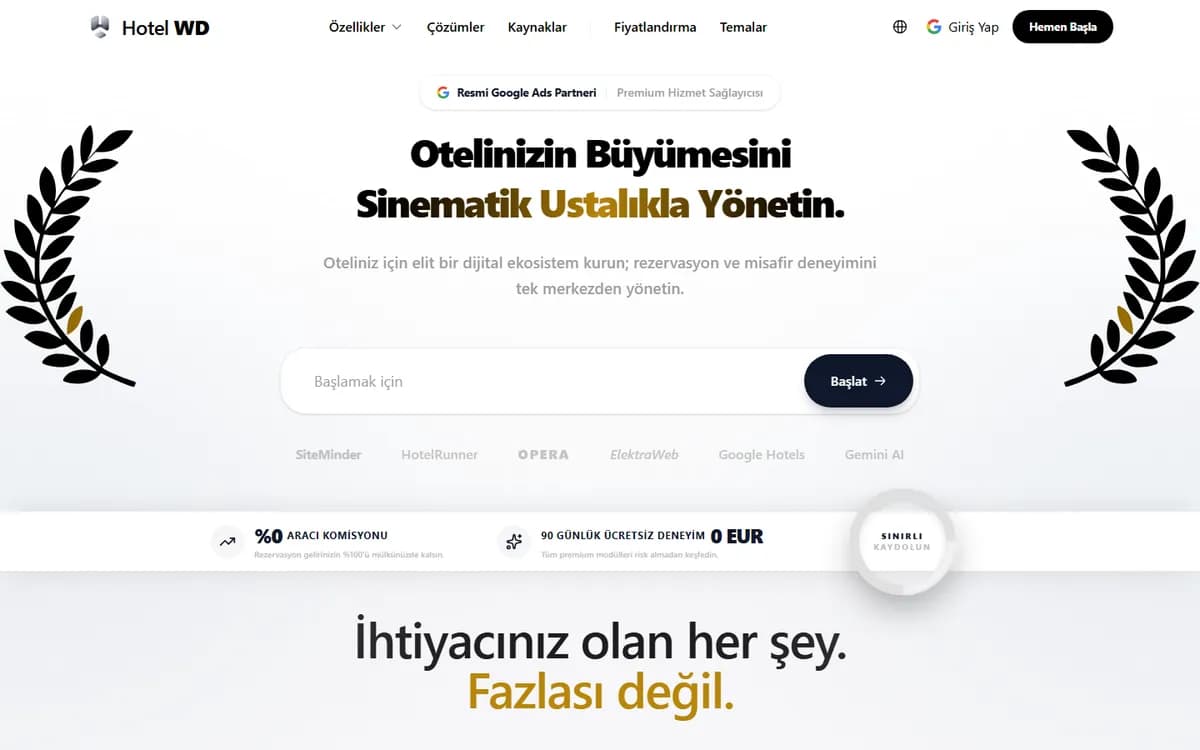

hotelwd.com, measured with our own SEO checker
export const metadata = {
  title: "Corporate Website",
  alternates: { canonical: "/" },
};
export default () => <LandingPage />A classic website is finished the day it launches. Then the ads start: the landing page is slow, Google struggles to read the content, and nobody knows how many leads the contact form brought in. The site we build is where the work begins. Ads, search and measurement run on it from day one.
Web design is the work of planning and building how a website looks, how it's organized and how visitors use it. It isn't just picking colors and fonts. How the pages connect, how fast the site loads and whether a search engine can read it are all part of the design.
Good design takes visitors to what they came for by the shortest route and turns them into customers. To get there, we think about three layers together.
Which pages exist, how they connect and in what order a visitor meets them. It comes before any visual design, and changing it later is expensive.
Color, type, spacing and components settle into one system. The site holds together as it grows, and every new page speaks the same language.
This is where the design reaches the browser. Load speed, behavior on a phone and whether a search engine can read the page are all decided here.
Google rates the quality of Search ads with a Quality Score from 1 to 10, built from three components. The first two are about the ad itself. The third is entirely the website's job, and we design the site with that component in mind.
How likely your ad is to be clicked when it shows. Ad copy and keyword choice drive it.
How closely the ad matches what the searcher wants. That comes down to campaign structure.
In Google's words, how relevant and useful your landing page is to the people who click your ad. A page that shows what they searched for right away, loads fast, works well on a phone and says clearly who you are carries this component.
Quality Score is a diagnostic tool; on its own it doesn't set your ad position. But a weak landing page wastes even the best-written ad.
Google Ads Help: About Quality Score ↗We don't treat SEO as something that happens after the site is built. Everything below is set up and checked before handover on every project, so the SEO work that follows starts on solid ground.
Content and link work after launch is a separate service. Our SEO service ›
Next.js is a web framework built on React. We chose it because it gives a business website four things at once.
Pages arrive fully rendered from the server. Google, and the AI crawlers that don't run JavaScript, read your text without waiting.
Images are sized for each device, and no code ships that the page doesn't need. Visitors don't wait, and ad clicks don't go to waste.
There's no outdated plugin quietly opening a security hole. Maintenance happens in the code itself.
A new language, a new page type, a client portal or an integration goes into the same codebase. The site doesn't get rebuilt every time you grow.
We moved turksem.com from WordPress to Next.js ourselves. The site runs in three languages, and our client portal and tools share the same stack. Anything we recommend to a client, we try on our own site first.
Meta develops React and asks for a Contributor License Agreement (CLA) before it accepts code contributions. Our team has signed it, which puts us among the registered developers who can contribute to React.
React's contribution guidelines ↗“A website has to reflect your mission and your vision as accurately as possible.”
These are our group's own sites, and they serve real users every day. For client projects, see our case studies.
A hotel website and booking platform. Built on Next.js, with 14 ready-made themes and a Google Hotel Ads connection.
Hotel website software ›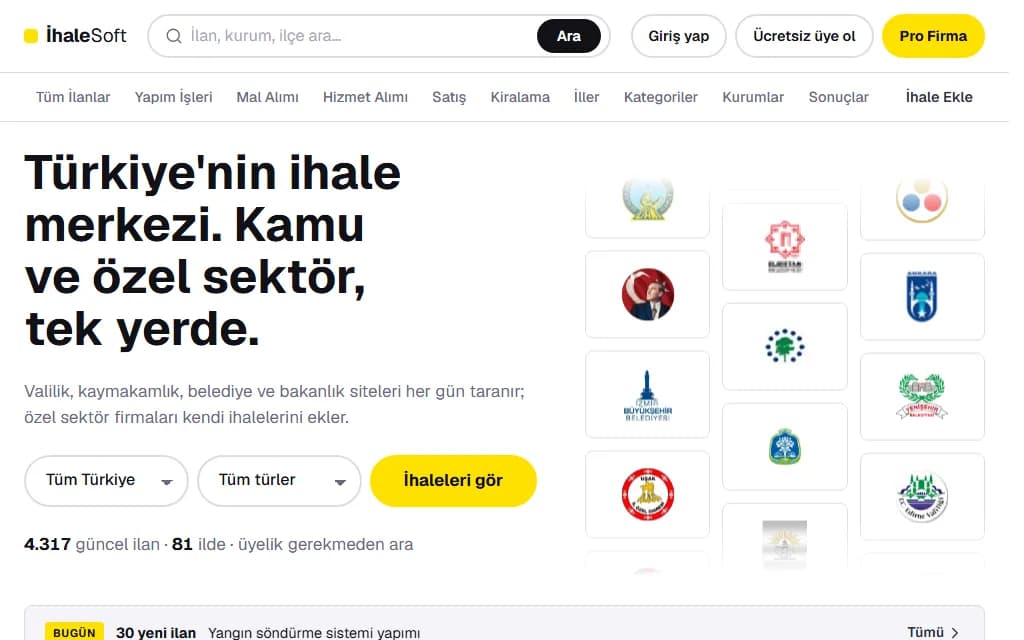
A tender-tracking platform that brings public and private-sector tenders in Türkiye into one place. It scans listings from all 81 provinces every day.
ihalesoft.com ↗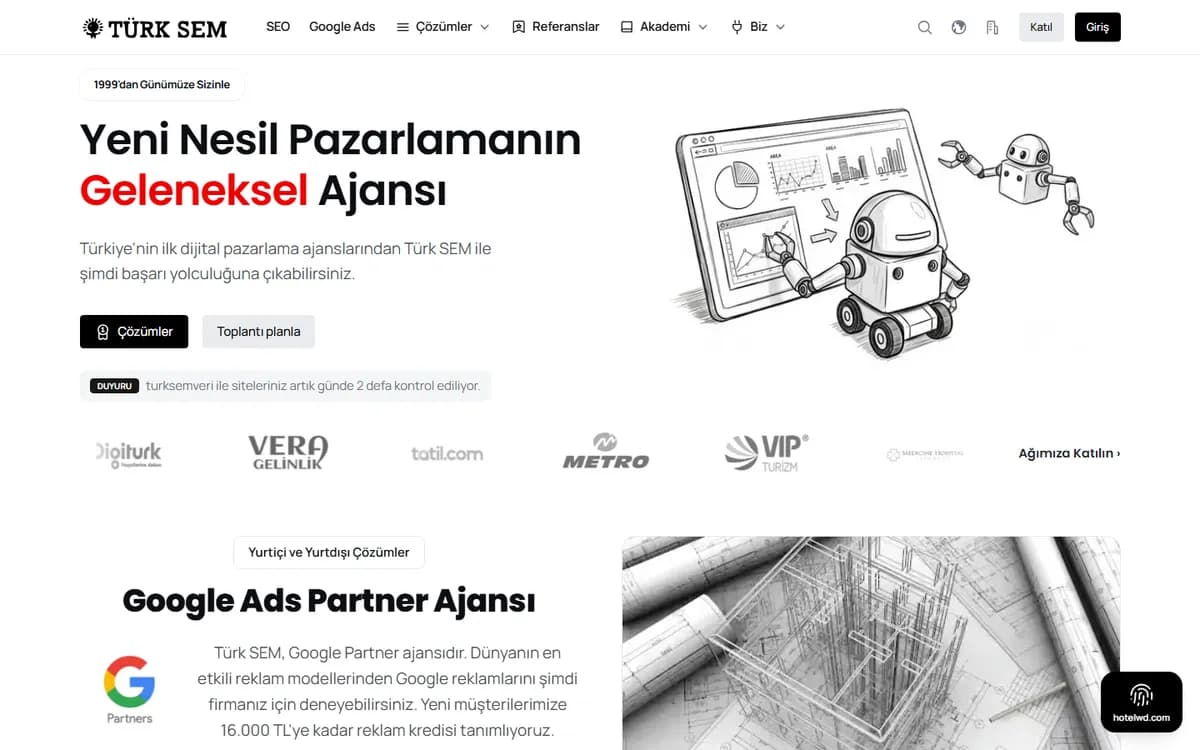
Our agency site and client portal. Moved from WordPress to Next.js and live in three languages.
About us ›Every project follows the same order, and the order matters. Changing the structure of a page that's already coded takes almost as much work as starting over.
We talk through your goals, your customers and your competitors. If you already have a site, we look at its pages and its search data.
Together we map the pages, plan the content and decide where visitors will ask for a quote.
We build a design language around your brand and code the site in Next.js.
We check speed, mobile behavior, accessibility, forms and tracking, one by one.
Old URLs redirect to the new pages. Search Console and the sitemap are ready on launch day.
After launch we watch the numbers, handle updates and add new pages.
A corporate website usually goes live in 2 to 4 weeks. Custom software, e-commerce and larger projects depend on the scope and typically take 2 to 4 months.
Looking good is not enough. Load speed, security, behavior on mobile and how current the code is can all be measured, and we measure them before every handover. You can run the same checks yourself with our tools.
Enter your address and Turksemveri will crawl the site and open a full SEO report. When we talk about what a new site should change, that report is where we start.
Your site's address
No sign-up needed. The report is free.
Web design isn't a new line item for us; it's where we started. When our first site went live in 1999, most of today's tools didn't exist. Company names changed over the years, but the habit of building sites that bring in customers never did.
“During our Türk Dizayn years we worked with Cüneyt Özbilen, and together we fought hard for Joomla to be named Adabox. The name didn't make it.”
Our founder's first website went live.
First corporate projects at a web design firm founded by Erdemir engineers in Karadeniz Ereğli, Türkiye.
One of the first agencies in Türkiye to offer digital advertising. The same year, an editor role at the Open Directory Project.
The years when most of our web design experience was built. We followed open-source content management systems from their earliest days.
Corporate website projects as a web design agency.
Web design, SEO and Google Ads brought together in one agency.
We rewrote our hotel software as HotelWD and moved turksem.com to Next.js.
We ran the hotel software we wrote in PHP for about 15 years and installed it for hotels. In 2026 it gave way to HotelWD, which we rewrote in Next.js. The technology changed, the discipline didn't: tie design to strategy, and code to marketing.
A trustworthy company site that brings in calls and quote requests. Usually live in 2 to 4 weeks.
Corporate website design ›A store with payments, products and orders wired in, set up to sell alongside your ads.
Ecommerce website design ›A fast, single-purpose page for your Google Ads to land on.
Landing page design ›Each language built for its own market; we have experience in Germany and the US.
Multilingual website design ›Sites designed from scratch for brands and workflows a template can't handle.
Custom web design ›Systems built around your business: bookings, memberships, quotes or an admin dashboard.
Web development ›“We worked with Türk SEM on project management for our national newspaper's website, and they hit every target they set for the first year without a single miss.”
 Okan SarıkayaYeni Birlik Gazetesi
“We hired Türk SEM to build the best possible website for our hospital's patients, and they reached every goal we set.”
 Göksel KaramuğlaMedicine Hospital
A corporate website usually goes live in 2 to 4 weeks. Content sets the pace more than anything else: if the copy and images are ready, things move faster. Larger projects such as custom software, e-commerce or a client portal depend on the scope and typically take 2 to 4 months. We give you a firm timeline with the quote.
Four things set the price: the number of pages, custom features such as calculators, bookings or memberships, who prepares the content, and connections to outside systems. Custom-designed corporate sites start at 50,000 TL. We give you an exact figure in a written quote once we understand what you need.
Google judges ad quality on three components: expected clickthrough rate, ad relevance and landing page experience. The third one is the website's job. People who click your ad should find what they searched for right away, the page should work well on a phone, and it should be clear who you are. We design the site with that component in mind, so your ads land on a solid page from day one.
Used well, WordPress is a good content management system. On business sites, though, it often turns into a pile of themes and plugins, and each plugin costs something in speed and security. With Next.js, pages arrive rendered from the server, no unnecessary code loads, and there's no plugin-shaped security hole. It's also why we moved our own site from WordPress to Next.js.
The SEO groundwork is part of every project: heading structure, meta tags, structured data, the sitemap, speed work and Search Console setup. Content and link building after launch are a separate SEO service.
Either can be right. The deciding factor isn't budget, it's the job the site has to do. A template is a sensible start when your content structure is standard and you'll stand out through content rather than visuals: it launches sooner and is easy to maintain. Custom design is the answer when the site itself is a sales tool. Product explainers, calculators, multi-step forms and integrations with other systems run into a template's limits fast.
AI helps in two separate places, and people often mix them up. The first is production: draft copy, image variations, snippets of code. The gain there is speed, and it doesn't replace judgment. The second is reading: using data to see how a site behaves with visitors and where a page stalls. The real value is in the second, and we do it with Turksemveri, so design decisions rest on measurement rather than guesswork.
Leave your company name and phone number, and our team will call to hear what you need. We send the quote in writing.
Weekdays, 10:00 to 18:00 Türkiye time
Pamucak, Büyük Bölcek Cd. No: 110/3
68200 Aksaray Merkez/Aksaray