

This piece carries the personal views of Tahir Dinç. It goes alongside the subject of SEO (search engine optimization).
Who among us waited ten minutes on a dial-up line just to reach a website? In those days, the best way to send a photograph to someone you had met online was the post. I mean an ordinary letter, in an envelope. Back when we checked the weather on Teletext, there was not much to do on the internet anyway.
One thing from that time stayed with me: waiting on a connection for tens of minutes to download a ringtone for a Nokia 3210. The idea for my first website came out of exactly that, sharing those note sequences. The thinking was simple. Instead of a site that sent the notes to your phone by SMS, a site that shared the notes with us would get the music we wanted playing far sooner, because typing the notes into the phone took less time. I never did build that site.
Time passed and the internet grew more popular; people were searching for the singer they loved, the actor from the series they followed, and by then the year was, I think, already 2005.
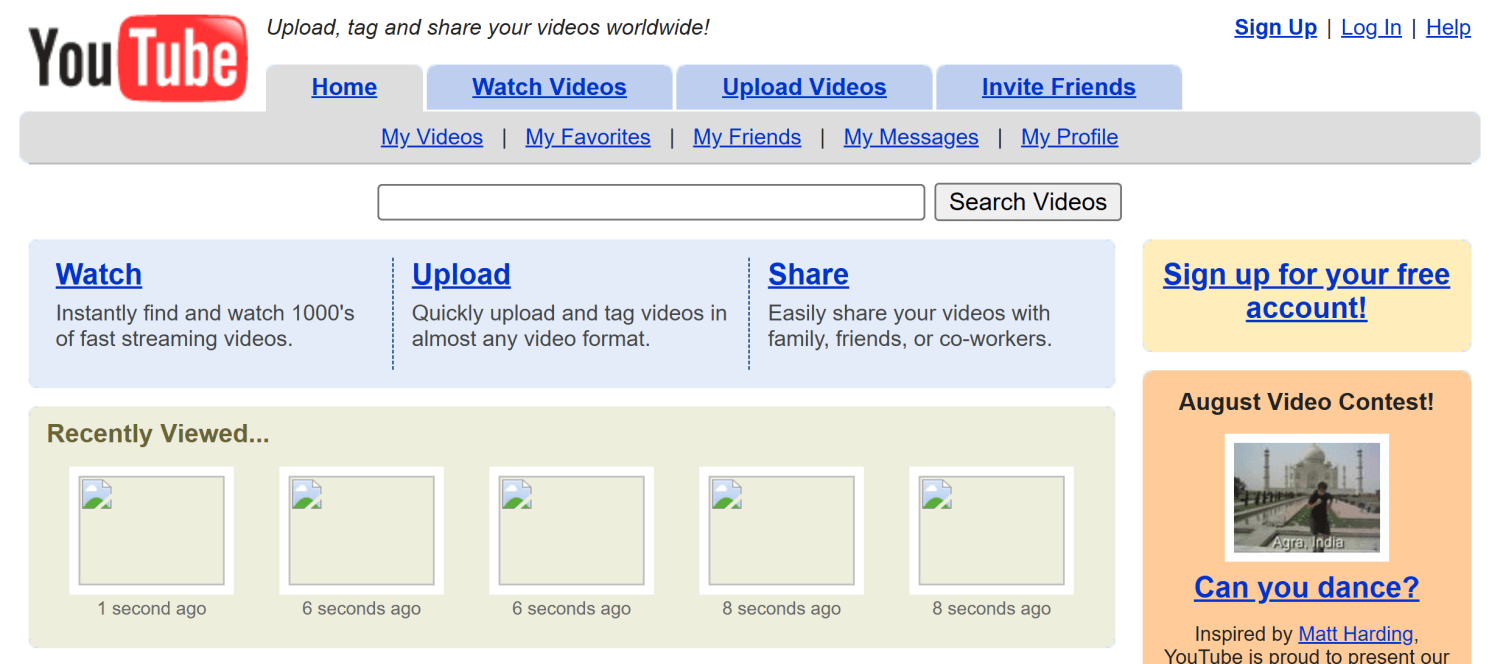
In SEO, giving people the information they actually want has always been what counts. I think my project idea crossed paths with those of Steve Chen, Chad Hurley and Jawed Karim, who founded YouTube, at more or less the same moment. What set off my own idea for a video-sharing platform was “Dikkat Şahan Çıkabilir”, the sketch show made by Şahan Gökbakar. It was the craze of its day, and people wanted to watch the program they had seen on television again, on the internet.
As an SEO specialist, around 2005 I built a simple system to answer that. I dropped the videos to 240p and served them at that resolution. The income never covered the costs, though, and reseller hosting could not carry the traffic that came.
At that same moment the inspiration was alive in the three founders of YouTube in America, and they had raised three million dollars. Their first video became YouTube’s first video, “Me at the zoo”.
YouTube was later bought by Google for 1.7 billion dollars. Google is one of the most successful companies at acquisitions of this kind; Yahoo, to my mind, was every bit as unsuccessful. (see: Why Yahoo Failed)
On Inspiration
We are living through a period in which engineering ability has to meet the ability to design digital architecture. Right architecture, we might say, now sits a step ahead of right code. In this process a company’s quality is measured by whether it leads. Someone good at their job should be the first to diagnose what is missing in it. Leading-edge qualities bring quality to your company, and search engines understand that. At its root E-E-A-T is trying to understand your expertise in your field, and one of the best ways to prove it is the innovation you bring to your sector as a leader.
Now, with ideas like the title being important in SEO, the meta description being important, page speed being important, catching the substance of SEO is not easy. The best way to catch that substance is to put your own sector on the table and start with an honest analysis of what it lacks. Only 10% of SEO has to do with the particular demands of a search engine, crawlability for instance. The other 90% is thinking about what the visitors to your site want, and giving them the data they want in the right presentation.
Inspiration Is Everywhere!


