1. Affiliate marketing
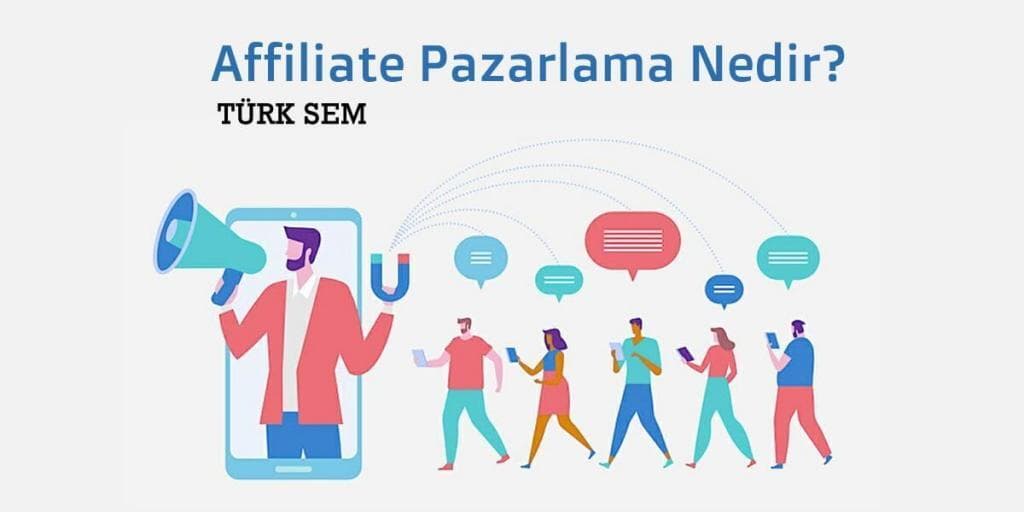
Affiliate marketing closes the gap between consumers and organizations through third party publishers and creators. Partners introduce your product or service to their own audience in posts, blogs or videos, and are usually paid a commission on each sale they bring in. Many people file it under influencer marketing, and the two really do overlap whenever a creator promotes through a tracked link.
Around 2006 and 2007 affiliate marketing mostly ran through websites, and its share of the market was rather small. We would place relevant partner links inside our sites and try to earn a little income from them; in our home market in Turkey the company doing this best at the time was Reklam Store. In recent years the model has grown enormously as new media such as TikTok, Instagram and YouTube became mainstream, and it is now one of the most popular branches of digital marketing. In our own research at Türk SEM we found that the US Bureau of Labor Statistics expects the number of advertising, promotions and marketing managers to grow by 10% by 2031. You can hold the commission economics of the model against your own figures in our affiliate ROI calculator.
2. Content marketing
Content marketing uses storytelling and useful information to build brand awareness, and its purpose is to move a reader from visitor to customer. By “content” we mean blog posts, white papers, e-books, videos and podcasts. Our view at Türk SEM is plain: the main goal should not be advertising the brand or pushing a sale, but giving the consumer something of value first.
Content marketing builds a relationship of trust that can lead to many sales over time rather than a single transaction, and it works in symbiosis with the other types: SEO needs new content, and the content you produce is reused on social media and in email newsletters. If people visit your site to learn something, they remember you as an authority once it is time to buy. Unlike PPC it is a long term strategy and it compounds. You can project what that compounding is worth in revenue with our content marketing ROI tool.
3. Email marketing
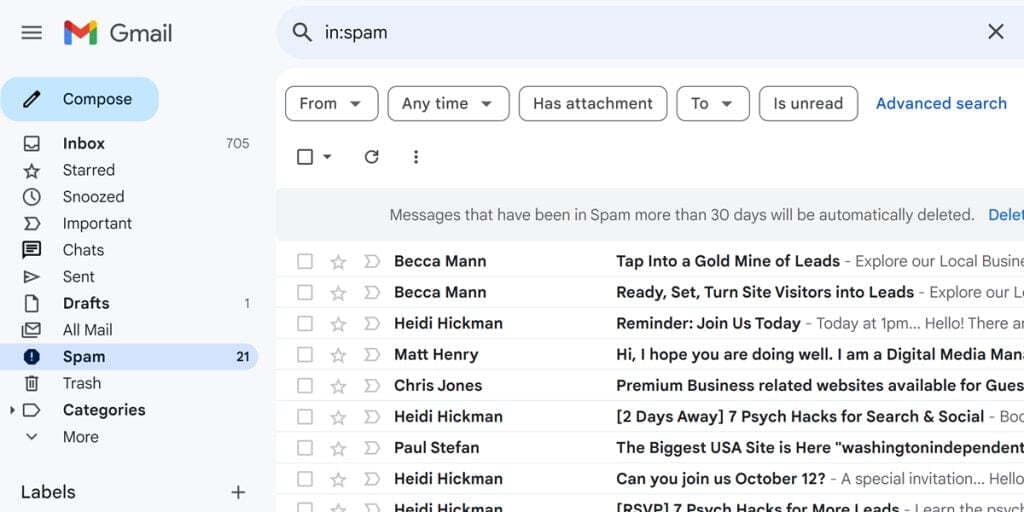
Despite the rise of social media and mobile apps, email is still one of the most effective marketing techniques, because it is a channel you own: you do not pay a media fee every time you want to reach your list. The two figures marketers keep trying to improve are the open rate and the click rate.
The proven ways to make email more appealing are personalization (the recipient's name in the subject line), letting recipients set how often they hear from you, and clear subject lines that promise something useful. Staying away from bought lists protects both your rates and your sender reputation. You can see how list size and your own rates turn into revenue in our email ROI calculator.
4. Marketing analytics
The greatest advantage of digital marketing is that it can be tracked and measured. Coupons were once the only marketing you could trace; if a customer redeemed one, you knew the message had landed. Today analytics shows in fine detail how many times a user clicked a link, how long they stayed on a page and how often they open your emails.
All that data can feel like drinking from a fire hose, and the craft lies in turning it into a decision. The most common tool is Google Analytics, which can be customized with an almost endless set of measurements. At Türk SEM we combine these tools according to what each client needs, and we carry the same measurement discipline into our public tools: you can take a technical and content snapshot of your site with our free SEO analysis and look at real user speed data in our PageSpeed portal.
5. Mobile marketing
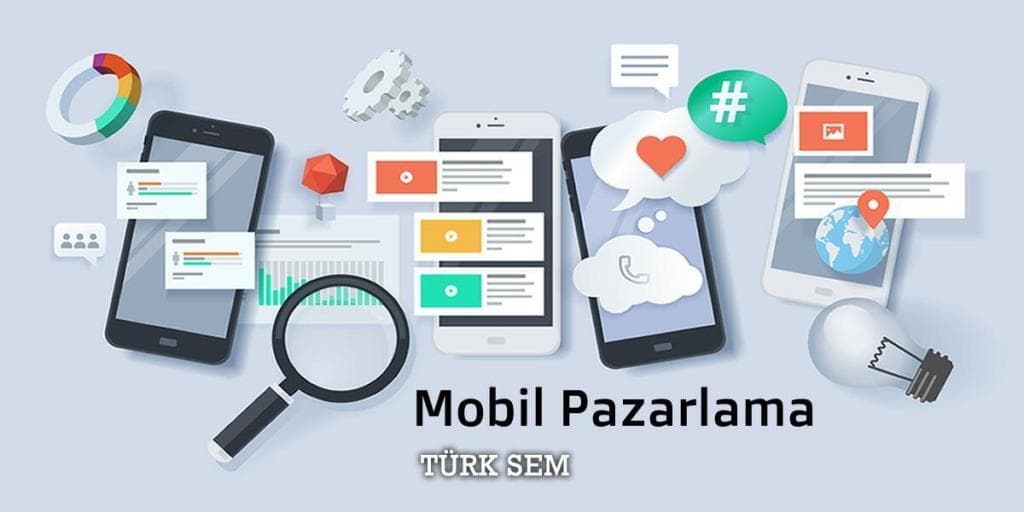
Mobile marketing focuses on reaching your audience through their smartphones or tablets: text messages, social media, the mobile web, email and apps. Offers can be shaped by location or by time, so a customer approaching a shop or arriving at an event can trigger a campaign.
Statista's survey work in the United States found that 46% of respondents spend five to six hours a day on their phone for personal use, with a further 22% spending three to four hours. Statista also puts worldwide retail e-commerce sales at roughly 5.7 trillion dollars for 2023. In most markets the majority of traffic now arrives from mobile, which makes the mobile experience less of a channel and more the ground every other channel stands on. You can measure your site's mobile speed and real user experience in our PageSpeed portal.
6. Pay per click (PPC)
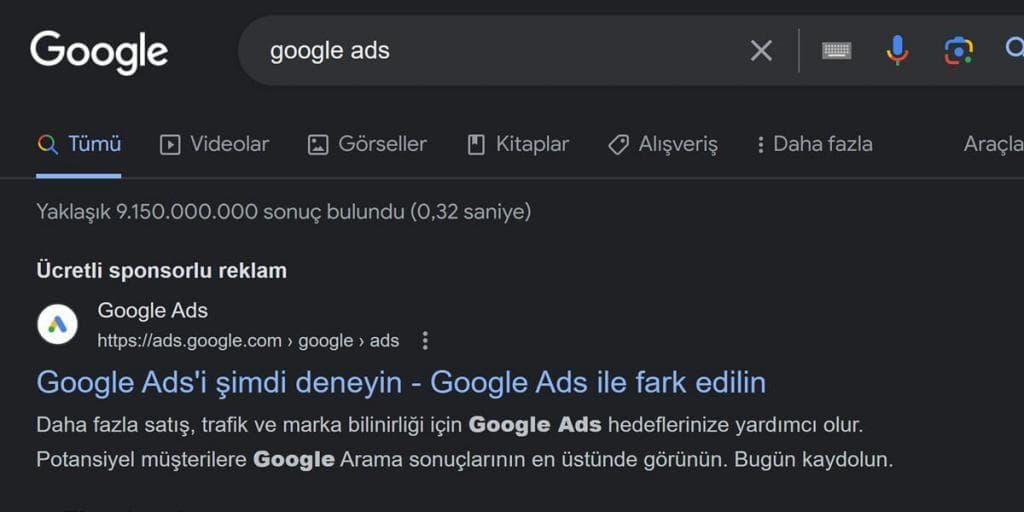
Pay per click means ads you pay for by the visitor. It is a short term form of digital marketing: when the payment stops, so does the ad. Like SEO, PPC is a way to increase search traffic; the difference is that organic results cost nothing per click and PPC does.
In a typical Google Ads campaign you only pay when someone clicks your ad and lands on your site. Cost depends first on keyword competition: highly contested terms are expensive, quieter ones are far cheaper. Campaigns can be shown to the whole world or only inside a defined geographic area, and for a physical business location targeting keeps you from spending budget on people nowhere near you. Türk SEM is a Google Partner. You can learn how the advertising model works on our Google Ads page and set budget against expected return in our Google Ads ROI calculator.
7. Search engine optimization (SEO)
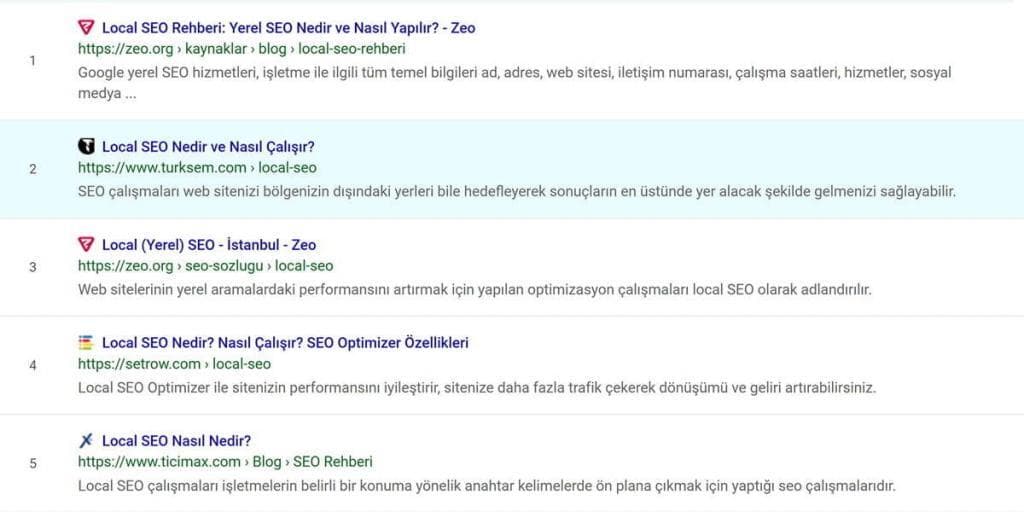
The goal of SEO is to place a business higher in Google search results and to grow the search traffic arriving at its site. To do that, SEO specialists research the words people use when they look for information and put those terms to work properly in the content. SEO covers a great deal, from the words on your pages to the way other sites link to you and how your site is structured.
What makes SEO hard is that the answer always depends on the search engines' current algorithms. The fundamentals are relatively stable all the same: indexable content (alt text on images, transcripts for media), a link structure search engines can crawl, and high quality writing that uses the right keywords. At Türk SEM we keep this set of criteria up to date and pour it into public tools. You can go deeper on our search engine optimization page, check where you stand for a keyword with the Keyword Rank Checker, and see your site's overall health through 90 checks in our SEO analysis tool. If your market sits outside your own country, our international SEO page explains how country targeted work is set up.
8. Social media marketing
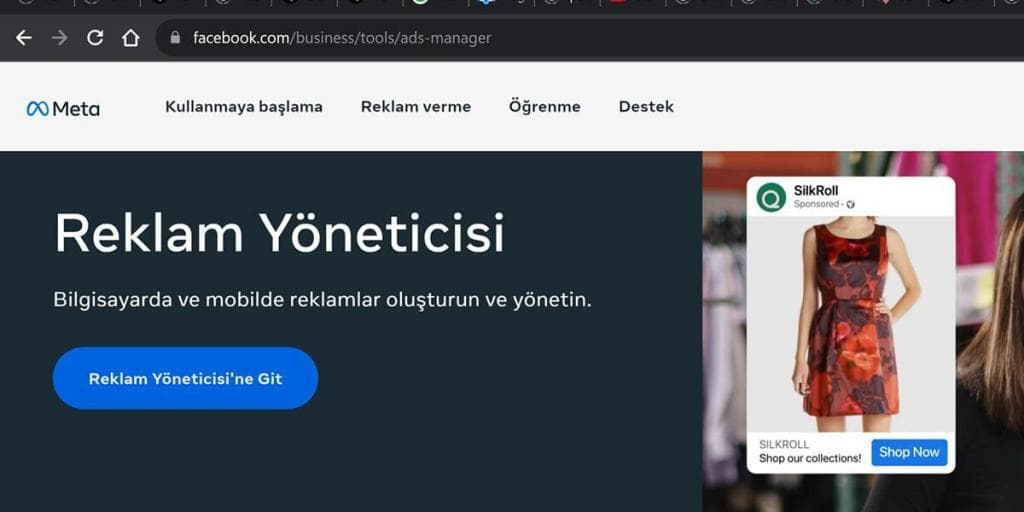
This covers everything a business does through its social channels. Almost everyone is familiar with social media, but marketers have to approach it in an integrated and strategic way. The work goes well beyond posting and replying to comments: the effort has to be coordinated and consistent.
There are plenty of automation tools for scheduling posts, but automation should only ever be a tool, never a “set it and forget it” solution. If there is no real person behind the posts, users work it out quickly. A social media marketer works with the wider marketing team so the brand tells the same story in the same voice on every platform, and a large part of the job is analyzing how posts perform and basing the strategy on that data. You can measure the return on your management and advertising budget in our social media ROI calculator.
9. GEO & AIO (AI visibility)
The newest type of digital marketing grew out of a deep change in how people look for information: they now put their questions not only to search engines but to AI chat tools such as ChatGPT and Gemini, and to the AI summaries Google shows above its own results. GEO (generative engine optimization) is the discipline of making sure your brand appears accurately and favorably inside those generated answers; at Türk SEM we gather our work in this field under the name AIO (AI optimization).
When AI tools build an answer they look for trustworthy, structured and answerable content: clear definitions, entity markup, consistent brand information and visibility in authoritative sources. In that sense it is a relative of classic SEO, but the measurement differs. Instead of a ranking position you watch how often your brand is mentioned, and mentioned correctly, inside AI answers. This guide is written on those principles: every section answers one question on its own. You can read the whole discipline in our GEO guide and see the methodology we apply on our AI optimization (AIO) page.