
People have argued about the “backlink effect” and what it does to Google rankings for a decade now. I want to set out how we see it. A backlink is simply a link to “your website” from someone else’s site. It sits at the foundation of PageRank, the technology that made Google’s name, and Google’s first ranking logic was built on it. Back then the theory came down to one idea: more backlinks, better rankings.
The premise, as I said, was that “a page worth reading earns plenty of links”. I remember it clearly: around 2005 that was the entire system. All of SEO was built on it, and so was our day-to-day workload. Bear in mind that Google had no Turkish speakers on staff back then, and no filtering system was in place yet. If I remember correctly, it was late 2005 when “Sandbox” arrived. It found the sites that had been collecting artificial, low-quality links and removed them.
This was a ban with no appeal, a clean removal from every Google server. Google wanted to put the fear into webmasters, and it worked. In Turkey alone, tens of thousands of sites were banned, and many of the sites caught by that first filter in 2005 have never recovered a decent position in search.

Once Google had Turkish speakers of its own, the Turkish-language web ran into far fewer junk sites. Manual actions made it cleaner still. Within a few years SEO would grow into a job of its own and rise into a profession, because ranking on Google had become a serious source of income. Backlinks had changed, but their effect had not disappeared. Google, though, would never speak about that effect. It would talk about the dangers instead.
Of Course It Was Dangerous. It Was the Reason for the Filter
The phrase professional SEO specialist entered our vocabulary precisely because Google’s algorithm changed so often and refused to settle into a single system. You can still find people who have read whatever was lying around online, worked on a couple of sites, and now call themselves SEO specialists. They will tell you that backlinks are the basic principle of ranking. That is not how it works. Backlinks, or rather unnatural backlinks, are a reason to be filtered. What we are trying to build here is a site people would link to anyway. They will link to us, but they will do it because they want to.
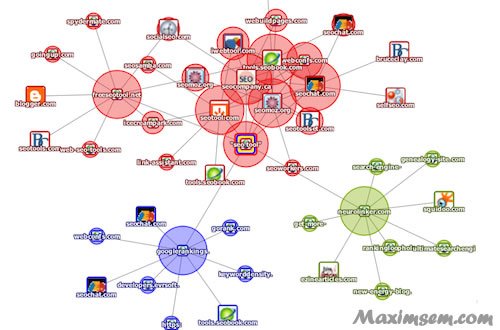
If someone introduces themselves to you as an SEO specialist and starts talking about “backlink” packages and how many sites you will be added to, walk away. You may be about to make a decision your company will regret.
We have also written a history of how search engine optimization developed, year by year, from the perspective of Google, Yahoo, Bing, Mynet and Dmoz.
To Sum Up
A backlink should be the product of a natural process. It does have an effect, but a link placed artificially for the sake of SEO will cause you trouble, or has already caused it the moment it went up. Some sites are “booby traps; getting listed on them will bring you real problems”, so do not sign SEO agreements sold as packages. Earn backlinks, by all means, but let them be natural.


